The Art of Bridal Bouquets: Origins and History

Bridal bouquets are one of the most recognizable wedding traditions, but their story stretches back thousands of years. Long before bouquets became carefully curated floral arrangements, they carried deep symbolism tied to fertility, protection, love, and good fortune. From ancient sheaves of wheat to today's personalized floral masterpieces, the bridal bouquet has evolved alongside the wedding traditions it accompanies.
Ancient Beginnings: Fertility, Protection, and Prosperity

Throughout ancient civilizations, marriage was centered around family, fertility, and the continuation of future generations. Life was often difficult and uncertain, making weddings one of life's most celebrated occasions. Strong spiritual beliefs and superstitions shaped many wedding customs including the flowers and plants carried by brides.

Rather than bouquets of roses and peonies, early brides often carried bundles of wheat, grains, and fragrant herbs. Wheat symbolized abundance, prosperity, and fertility, while herbs were believed to provide protection and blessings for the marriage. Dill was considered an aphrodisiac, rosemary symbolized remembrance and protection, ivy represented fidelity and strong bonds, and even garlic was carried to ward off evil spirits. These early bouquets were less about beauty and more about symbolism, serving as talismans intended to ensure a successful marriage and healthy future family.
The Language of Flowers
By the 18th and 19th centuries, flowers began replacing herbs and grains as the centerpiece of bridal bouquets. During this period, the Victorian's had a fascination with floriography, commonly known as the "language of flowers" that allowed people to communicate emotions and sentiments through specific blooms.

Every flower carried a unique meaning. Roses symbolized love, lilacs represented the first stirrings of romance, and baby's breath conveyed everlasting love. Couples carefully selected flowers not only for their beauty but also for the messages they conveyed.
Bouquets during this era started as small hand-tied arrangements and gradually grew larger and more elaborate as floral design became increasingly fashionable throughout the late 19th century.
Bouquets Through Times of Hardship
The first half of the 20th century brought tremendous challenges through two world wars and the Great Depression. These events influenced every aspect of wedding planning, including bridal flowers. Many brides opted for modest celebrations and practical attire. During World

War II, it was common for war brides to marry quickly while their partners were home on leave. Bouquets were often assembled from flowers gathered from family gardens, making them simple, meaningful, and deeply personal.
As economic conditions improved in the latter half of the century, wedding bouquets once again became more extravagant. One of the most famous examples was Princess Diana's dramatic cascading bouquet, overflowing with white flowers, ivy, and myrtle, a style that inspired countless brides throughout the 1980s and beyond.
Queen Victoria's Lasting Influence
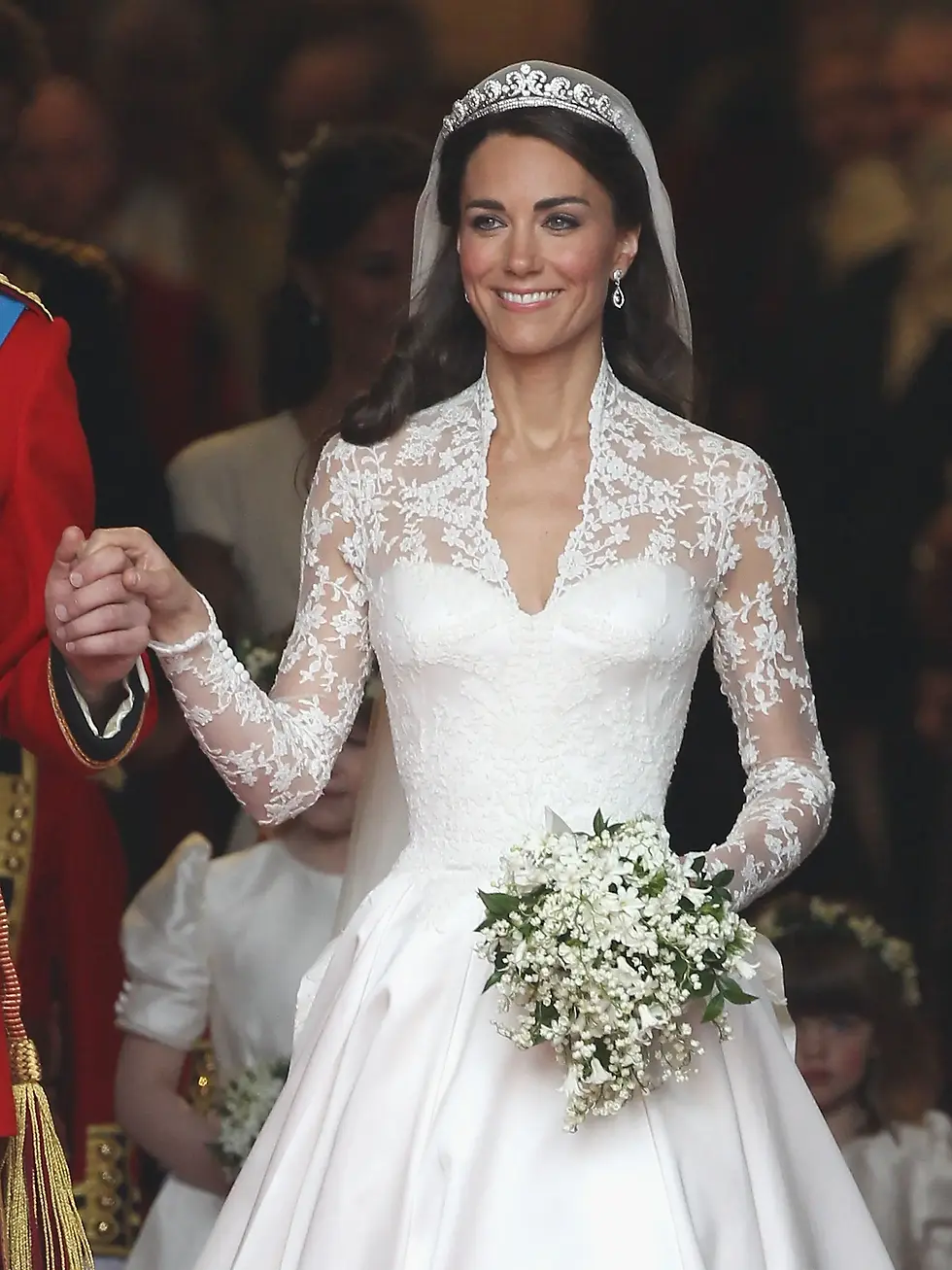
One of the most influential moments in bridal bouquet history came in 1840 when Queen Victoria married Prince Albert. Rather than carrying a heavily ornamented arrangement, she chose a bouquet featuring a sprig of myrtle and adorned herself with orange blossoms. Myrtle, which symbolizes love and marriage, became a lasting royal wedding tradition. To this day, members of the British royal family, including Catherine, Princess of Wales, have incorporated a sprig of myrtle descended from Queen Victoria's original plant into their bridal bouquets.
Queen Victoria's wedding helped shape many modern bridal traditions, and her floral choices continue to inspire brides nearly two centuries later.
The Symbolism of Wedding Flowers
Flowers have long been associated with specific meanings, and many couples still enjoy incorporating symbolism into their wedding florals today.
While Victorian brides often relied heavily on flower meanings when designing their bouquets, modern couples typically balance symbolism with aesthetics and personal preference.
A bouquet may include flowers chosen to honor a family tradition, reflect cultural heritage, commemorate a loved one, or simply feature a favorite bloom. The tradition of assigning meaning to flowers continues to offer couples a beautiful way to tell their own story through floral design.
The Modern Bridal Bouquet
Today's bridal bouquets are more personal than ever. No longer restricted by superstition or tradition, modern brides use flowers as an extension of their style and personality.
Some choose blooms based on symbolic meanings, while others focus on color palettes, seasonal flowers, or cultural influences. Sustainability has also become increasingly important, with many couples opting for locally sourced flowers, dried arrangements, or heirloom quality silk florals.
Whether it is a romantic arrangement overflowing with garden roses and eucalyptus, a structured bouquet of white roses and pearls, or a dramatic cascade inspired by royal weddings, the modern bouquet serves as a reflection of the bride herself.
From ancient wheat sheaves to contemporary floral artistry, bridal bouquets have remained a beloved wedding tradition for centuries. While their purpose has evolved, they continue to symbolize love, celebration and the beginning of a new chapter, making them one of the most meaningful accessories a bride will ever carry.
Extra info on Bouquets!!
Why Bridesmaids Carry Bouquets
Although the bride was originally the sole flower bearer, bridesmaids eventually joined the tradition. Over time, bouquets became a practical and aesthetic addition to the bridal party.
Bridesmaid bouquets create visual harmony throughout the wedding, complementing the bridal bouquet while providing a natural accessory for photographs. Today, these arrangements are thoughtfully designed to contribute to the overall floral story of the celebration.
The History of the Bouquet Toss
One of the most recognizable wedding traditions associated with bridal bouquets is the bouquet toss. While the custom as we know it today became popular in England during the 1800s, its roots stretch back even further.
In earlier centuries, it was considered incredibly lucky to touch a bride on her wedding day. Marriage was viewed as a major milestone, and many believed that some of the bride's happiness and good fortune could be transferred to others through physical contact. As a result, unmarried women would often crowd around the bride, hoping that a touch of her gown or person would bring them luck in finding a husband of their own.
According to popular legend, some eager wedding guests would even attempt to tear off pieces of the bride's dress as keepsakes. To avoid being mobbed, brides began throwing their bouquets into the crowd as a distraction before making a quick escape. Over time, this practical solution evolved into a formal wedding tradition.
By the 19th century, the bouquet toss had become an established part of wedding celebrations. The custom shifted from a chaotic scramble for good luck into a playful ritual where unmarried women gathered to catch the bouquet. Tradition held that whoever caught it would be the next to marry.
Today, the bouquet toss is largely viewed as a lighthearted and entertaining wedding activity rather than a serious prediction of future marriage. As marriage has become a personal choice rather than a social expectation, the tradition has evolved into a fun way for brides to involve their friends and add an interactive moment to the reception.
For couples who choose to include it, the bouquet toss typically takes place during the reception. The bride gathers all willing participants onto the dance floor, turns her back to the crowd, and tosses the bouquet over her shoulder. Amid laughter, cheers, and a bit of friendly competition, the bouquet toss remains one of the most enduring and beloved wedding traditions.

Comments