Let Talk About Pleats!

A pleat is a type of fold formed by doubling fabric back upon itself and holds it in place. It is commonly used in clothing to narrow a wide piece of fabric through gathering. Pleats sewn into place and used primarily as decoration are called tucks. Pleats come in many varieties, each with unique methods of creation, function, and history, making them a cornerstone of textile design and garment construction. Beyond the simple fold, pleats are a means of controlling fabric volume, adding texture, and creating dynamic movement in clothing and even some home decor.
The method of creation often dictates the pleat's final appearance, whether they are crisp, heat-set knife pleats used in uniforms and tailored skirts, soft, unpressed accordion pleats that cascade elegantly, or intricate, hand-stitched cartridge pleats that add structure to heavier fabrics.

Historically, pleating techniques have evolved from complex handwork, such as the thousands of tiny, permanent sunray pleats found in Mariano Fortuny's Delphos gown, to modern industrial processes that can efficiently replicate complex folds. The function of a pleat can be purely aesthetic, offering visual interest and an element of luxury, or highly practical, providing ease of movement, enabling a garment to expand and contract, or ensuring a better drape and fit across the body. Pleats are having a major resurgence in bridal fashion, gowns like the Danielle Frankel number Alexandra Daddario wore for her iconic New Orleans nuptials and gowns with the delicate micro pleats Nadia Manjarrez is known for, pleats of all kinds popped up in the collections of countless wedding designers NYBFW this season.
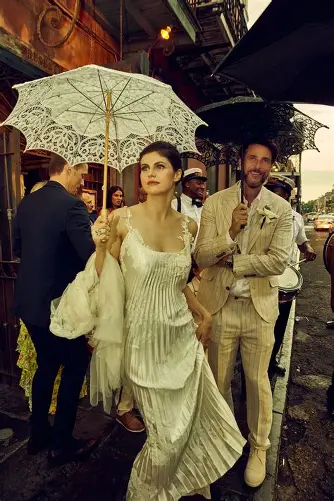
These thoughtfully constructed folds add more than just visual interest. They move with you, catching light and air as you walk down the aisle or glide across the dance floor. Pleats create architectural interest especially when they’re made from fabrics like satin, silk organza or crinkled silk that catch the light with every movement. These materials add depth and dimension, making your gown appear fluid and luminous in both still photos and video. Whether you’re marrying outdoors in golden sunlight or inside a softly lit venue, the right fabric will enhance the natural shimmer of each pleat. For brides who want their dress to glow without embellishment, a pleated gown in a light-reactive fabric is the perfect choice.
Here are some of my favorite designers who have stunning pleated their wedding collections in no particular order:


Comments